In complex industrial processes, the separation, filtration, and screening of materials are essential for ensuring product quality, operational efficiency, and safety. At the core of many of these key operations lies a universal and durable component: stainless steel wire mesh. This engineering material forms the foundation of countless applications, from refining oil to producing medicines. However, there are various specifications and knitting modes to choose from. How do you choose the product that suits your specific filtering needs? This guide will walk you through the essentials of stainless steel wire mesh, helping you make an informed decision for your industrial application.
What is stainless steel wire mesh?
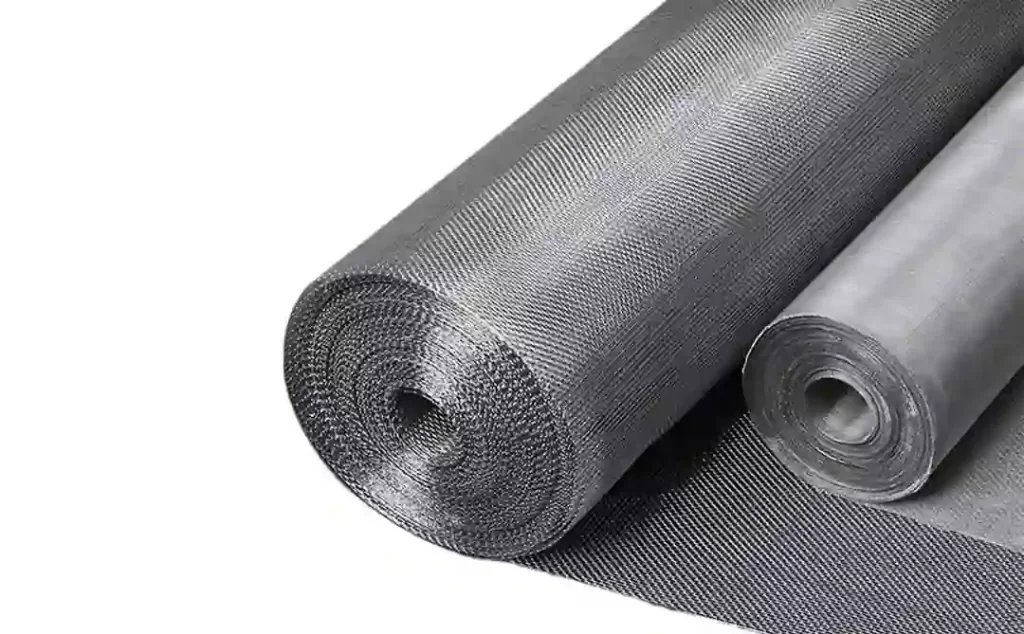
Stainless steel wire mesh is a kind of grid-like material, which is woven from stainless steel wires in the warp (longitudinal) and weft (transverse) directions. This simple and effective structure produces a mesh with precise and uniform openings. Its main function is to filter and screen gases, liquids and solid, and to separate different media in process flow.
Choosing stainless steel as the basic material, such as grades 304, 304L, 316, or 316L, can give it excellent internal performance. These alloys have excellent corrosion resistance, acid resistance, alkali resistance and high-temperature resistance, making them suitable for harsh industrial environments. In addition, its inherent strength provides excellent wear resistance, ensuring that it can be used for a long time even under wear conditions. The combination of durability and functionality is the reason why industries ranging from petroleum and petrochemicals products to automobiles, new energy, food and pharmaceuticals rely on stainless steel filter.
Main advantages and unique properties
Why do you choose stainless steel mesh instead of other filter media? Its advantages are obvious.
Excellent durability and long life: the corrosion resistance of stainless steel means that when exposed to moisture or chemicals,the mesh will not rust or degrade quickly. That means lower replacement costs and less downtime.
- High-Temperature Stability: Grades like 310 s can withstand extreme temperatures, making them an ideal choice for applications involving high temperature gases or molten materials.
- Exceptional Strength-to-Weight Ratio: The woven structure provides high tensile strength and rigidity, allowing it to withstand significant pressure differentials in filtration systems without deforming.
- Easy to clean and reuse: Different from disposable filter media, most stainless steel wire mesh filters are easy to clean (by backwashing, ultrasonic cleaning or baking) and can be reused many times, which greatly saves cost and is beneficial to the environment.
- Accuracy and Consistency: Advanced weaving technology enables wire mesh filter manufacturers to produce screens with extremely accurate and consistent aperture, which can achieve micron-level accurate separation.
Understand product specifications: materials and weave types
Choosing the right stainless steel screen requires understanding two core specifications: the material grade and the weaving mode.
Grades of material
The composition of the alloy determines the environmental resistance of the net.
- SUS 304/316: The most common grades. 304 provides a good comprehensive corrosion resistance. 316, which contains molybdenum, provides superior resistance to chloride and acid, making it an ideal choice for marine or chemical processing environments.
- Sus 304l/316l: The “L” denotes low carbon content, which makes the carbide precipitation in the welding process minimum and maintains the corrosion resistance of the welded assemblies.
- Other Grades: Special alloys, such as 904 l (for severe corrosive environment), 310 s (for high temperature applications) and 430 (for special corrosive environment) can also be provided.
Weaving categories and their applications
Weaving mode seriously affects the strength, stability and filtration characteristics of the net. Well-known wire mesh filter manufacturers usually provide the following fabrics:
| Weave Type | Diagram Description | Key Characteristics | Ideal Application |
| Plain Weave | Wires woven over-and-under in a simple crisscross pattern. | Good stability, moderate strength, and consistent filtering performance. | General-purpose filtration of liquids and gases, sizing, and screening. |
| Twill Weave | Each wire passes over two and under two warp wires, creating a diagonal pattern. | Higher strength and load-bearing capacity than plain weave; allows for the use of heavier wires. | Sieving abrasive particles and solids, vibrating screens, and applications requiring extra durability. |
| Dutch Weave | Features a coarse warp wire and a much finer weft wire, woven tightly. | Provides very high filtering accuracy and particle retention; exceptionally smooth surface. | Precision filtration in aerospace, petrochemical, and high-purity food & pharmaceutical processes. |
| Embossed Weave | Wires are pre-crimped before weaving, creating a locked, rigid structure. | Extremely rigid and stable with a flat surface; openings do not deform under stress. | Used as support screens, catalyst beds, and in applications requiring absolute dimensional stability. |
How to choose the right stainless steel wire mesh: A step-by-step guide
- Please follow the steps below to narrow down your choices.
- Determine your filtration goal: Determine the main purpose: screening solids, clarifying a liquid, filtering a gas or separating media. What size particles must be removed or kept?
- Analyze the Process Stream: Identify the chemical composition, temperature, pressure, and flow rate. This will determine the material grade required (e.g., For example, chloride-containing environments typically require 316 stainless steel, while high-temperature applications may require grade 310.).
- Determine the required micron rating: This is the most important parameter. It refers to the opening size of the mesh. You have to know the size of the particles you need to capture. Resources such as the American Filtration and Separations Society provide valuable technical information on filtration standards and particle size.(Source: American Filtration and Separations Society)
- Standard liquid/gas filtration using plain weave.
- Choose twill weave for heavy-duty screening of solid.
- Opt for Dutch Weave for fine, precision filtration.
- Consider Embossed Weave for support or extreme stability needs.
- Consider physical Requirements: Consider the required grid strength, stiffness and installation method (for example. Clamped, welded, contained in a filter basket).
Main industry application scenarios
The multifunction of Stainless steel wire mesh it indispensable in various fields.
- Petroleum and natural gas/petrochemical products: Used for sieve plate, catalyst retention, filtering crude oil, fuels and processing chemicals. Its heat resistance and corrosion resistance are very important here.
- Food and beverages: Used for screening powder, filtering syrups, oil and beverages, and filtering dairy products. Easy-to-clean, non-reactive grades 304 and 316 are very important for meeting health standards.
- Pharmaceutical & Biotechnology: Critical for sterile filtration, venting bioreactors, and processing active pharmaceutical ingredients (APIs), where precision and cleanliness are non-negotiable.
- Water and wastewater treatment: As the filter screens of water intake systems, filter panels in treatment plants and components of seawater desalination systems.
- Aviation and automobile: Used for fuel filtration, hydraulic systems, and protective screens of sensors and components. The ASM Aerospace Specification Metals Inc. This database is a useful resource for verifying the properties of high performance applications materials.
- New energy: It plays an important role in the production of bio-fuel and hydrogen fuel cells and the battery manufacturing filtration systems.
Frequently asked questions (FAQs)
Q1: How to define mesh size or micron grade?
A1: Mesh size usually refers to the number of holes per linear inch. The micron refers to the opening size in microns. A 100-mesh screen has about 100 openings per inch, but the exact micron opening depends on the diameter of the wire. Be sure to consult manufacturer’s specifications for the precise micron retention of a specific stainless steel screen.
Q2: Can stainless steel mesh be customized?
A2: Yes, professional metal mesh filter manufacturers usually provide customized services. This includes cutting into specific shapes, rolling into a cylindrical or conical shape, welding frames or flanges around the net, and assembling complete filter elements or baskets according to your equipment.
Q3: How to clean the blocked stainless steel mesh filter?
A3: The method of cleaning depends on the pollutants. Commonly used methods include:
- Backwashing: Reversing the fluid flow to dislodge particles.
- Ultrasonic Cleaning: Using high-frequency sound waves in a cleaning bath for thorough de-clogging.
- Hot baking: Burn off organic residues in an oven (suitable for the temperature limit of mesh grade).
- Chemical Soaking: Dissolve specific deposits with a weak acid or solvent bath.
Q4: In this case, what is the difference between a “filter” and a “screen”?
A4: These two terms are often used interchangeably. Generally speaking, “filtration” means to remove very fine particles from a fluid (gas or liquid), and a fine stainless steel filter screen like a Dutch weave is usually used. “Sieving” usually refers to the separation or classification of solid particles, and usually uses a stronger weaving method, such as twill.
Conclusion
Choosing the right stainless steel screen is a technical decision, which will directly affect the process efficiency, product quality and operating costs. By systematically considering your application requirements—such as chemical environment, particle size, pressure, and mechanical stress—and matching them with appropriate material grade and weaving pattern, you can choose a filtration solution with high reliability and long service life. Working with an experienced wire mesh filter manufacturer who can provide technical data and customized manufacturing support is the last step to ensure the best performance of your industrial filtration system.