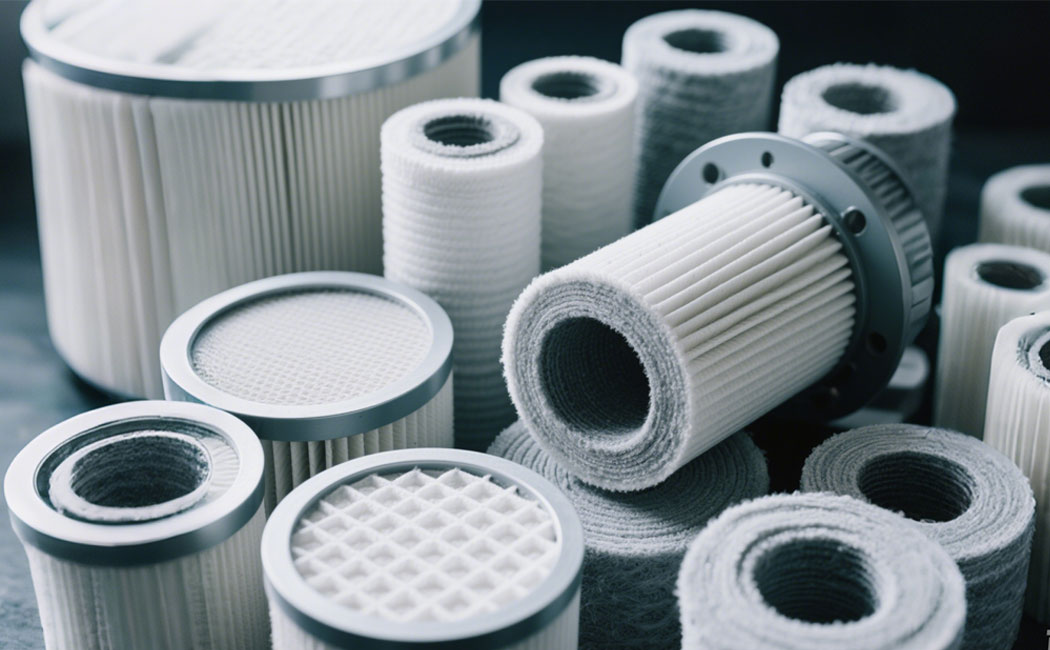
Oil filter production is a precise multi-step process impacting engine performance. One key step is end bonding of automobile filter paper, which maintains structural integrity under engine conditions. Traditional manual or single station welding leads to inefficiencies, inconsistencies and high costs. The Two-Station Oil Filter Paper End Bonding Machine is a specialized solution in modern oil filter machine lines, boosting automotive filter paper finishing efficiency.
In order to Effective bonding requires careful control of the production process: pleat automobile filter paper (selected according to filtration efficiency and durability) to form a cylinder, and then bond both ends. Poor bonding can lead to filter element failure, so the quality of adhesion directly determines the reliability of filter element.
Traditional bonding methods hinder efficiency and quality. Manual bonding is inconsistent and slow, while single-station machines process one filter at a time, resulting in idle time and high labor costs. The Two-Station Machine offers a more efficient, consistent solution for automotive filter paper end finishing in oil filter machine lines.
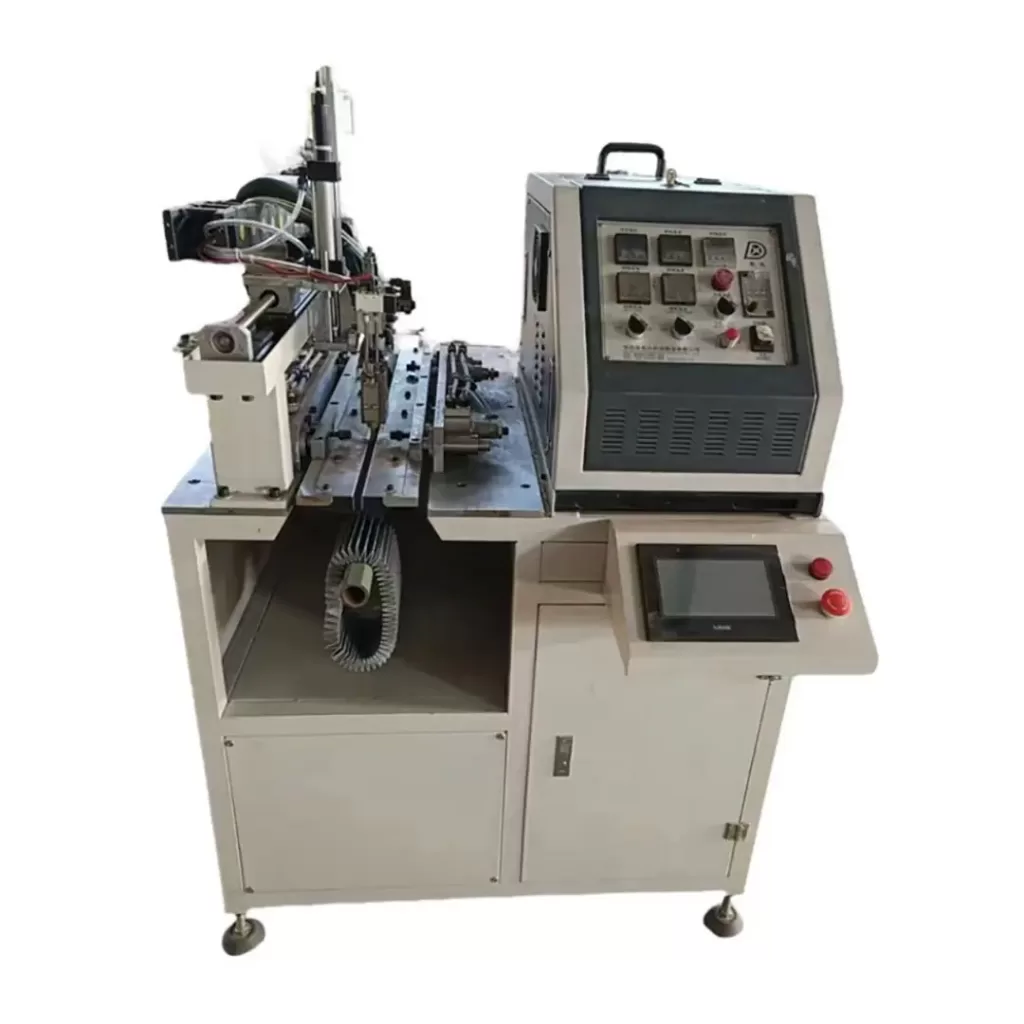
What Is a Two-Station Oil Filter Paper End Bonding Machine?
A Two-Station Oil Filter Paper End Bonding Machine specializes in automotive filter paper end finishing, bonding pleated paper ends to a rigid filter core. Its dual-station design streamlines bonding, making it ideal for high-volume oil filter machine lines.
The machine’s core is its dual independent workstations, operating simultaneously to process two filters at once. This eliminates single-station idle time. The operator loads one workstation while the other performs welding-thus creating a continuous and efficient workflow. It can also bond automobile filter paper synchronously, ensuring that the adhesive application, pressure and temperature across all products are the same.
This machine is typically positioned after the filter pleating machine (making pleated automobile filter paper) and before the filter forming equipment (assembling the adhesive core into the final shell). An integrated bonding head applies accurate and uniform hot-melt adhesive to the end of automobile filter paper. The machine primarily handles automotive filter paper (standard and high-efficiency) and accommodates different sizes, suiting various oil filters. It also processes and synthesizes filter media, thus enhancing versatility of the oil filter production lines.
Key Features of the Two-Station Bonding System
3.1 Dual Workstation Bonding Design
Two independent workstations are running at the same time, handling two filters at the same time. Operators load one while the other bonds, eliminating idle time and boosting throughput—critical for high-volume oil filter machine lines.
3.2 Accurate Hot Melt Adhesive Application
An integrated bonding head applies precise and uniform hot-melt adhesive to the end of automobile filter paper. Hot melt adhesive has fast curing speed and firm adhesion. The system can be adjusted according to different paper types, eliminating the inconsistency of manual operation.
3.3 HMI Control System Of Touch Screen
The touch screen man-machine interface simplifies operation: operators configure the welding parameters and monitor processes in real time, which reduces downtime, shortens the learning curve, and ensures consistent performance.
3.4 Automated Feeding And Material Handling
Automatic feeding eliminates manual filter paper handling and reduces the errors. It conveys the pleated paper to workstations and discharges the finished paper cores, which stabilizes the workflow of the oil filter and reduces bottlenecks.
3.5 Industrial Grade Machine Manufacturing
Industrial-grade structure (high-strength steel frame, reliable components) ensures durability for factory use, supporting 24/7 all-weather operation and is easy to maintain, and is an ideal choice for oil filter manufacturing.
Technical Specifications Overview
Key technical specifications balance efficiency and versatility, with impacts on production performance outlined below:
| Technical Specification | Value | Impact on Production Performance |
| Applicable Material | Oil filter paper media | Ensures compatibility with the primary material used in oil filter production, allowing the machine to integrate seamlessly into oil filter machine lines focused on automotive filter paper processing. |
| Bonding Speed | 6–12 pcs/min | Provides flexibility for different production volumes—lower speeds for small-batch production and higher speeds for high-volume lines. The dual-station design ensures this speed is maintained without idle time, maximizing throughput. |
| Adhesive Type | Hot melt adhesive | Hot melt adhesive cures quickly, reducing bonding cycle time and allowing for faster processing. It also provides strong, reliable bonds that withstand engine temperatures and pressure, improving filter durability. |
| Number of Stations | 2 | Dual stations eliminate idle time, allowing for simultaneous processing of two filters and significantly increasing production throughput compared to single-station machines. |
| Working Air Pressure | 0.6 MPa | Ensures consistent pressure during the bonding process, which is critical for achieving uniform adhesive distribution and strong bonds across all automotive filter paper batches. |
| Motor Power | 4.0 kW | Provides sufficient power to drive the automated feeding, adhesive application, and bonding mechanisms, ensuring smooth and consistent operation even at maximum speed. |
| Control System | Touchscreen HMI | Simplifies operation and reduces human error, allowing operators to quickly adjust parameters and monitor performance, minimizing downtime and ensuring consistent quality. |
| Warranty | 1 year | Provides manufacturers with peace of mind, ensuring reliable performance and support for the machine, reducing the risk of unplanned downtime and maintenance costs. |
| Origin | China | Offers a cost-effective solution without compromising quality, making it accessible to manufacturers of all sizes, from small businesses to large-scale oil filter machine production facilities. |
These specifications can provide consistent and efficient performance when used together, making this machine a valuable supplement to any oil filter production line that focuses on finishing the end of automobile filter paper.
Applications in Oil Filter Manufacturing
The machine’s primary use is bonding pleated automotive filter paper into oil filter cores, which is critical for contaminant trapping and engine protection.
It also produces automotive filter paper components for air/fuel filters and industrial oil filtering products (for heavy machinery), in which the termination maintains structural integrity.
It excels in medium-to-high-volume lines, letting manufacturers scale production while cutting costs. In oil filter systems, it is installed between pleating and molding equipment to form a seamless automatic workflow.
Advantages of Automotive Filter Paper Production
6.1 Increased Production Throughput
The most significant advantage of the Two-Station Bonding Machine is its ability to increase production throughput. By operating two workstations at the same time, this machine eliminates the idle time associated with single-station machines. When one workstation is gluing the filter, the operator can load the next filter into the second workstation to ensure that the machine is always processing filters. This continuous workflow can double the production rate compared to single-station machines, making it ideal for high-volume oil filter machine production lines. For example, a single-station machine that processes 6 filters per minute can only produce 360 filters per hour, while a double-station machine running at the same speed can produce 720 filters per hour, thus effectively doubling the output without increasing labor costs. According to the data of Manufacturing Technology Association (AMT), compared with single-station or manual process, double-station automation equipment can reduce production downtime by 35% and increase the total production by 40%.
6.2 Consistent Bonding Quality
Consistent adhesion is very important for the durability of the filter. The precise bonding system of the machine ensures even application and eliminates manual/single station inconsistencies. This creates strong bonds capable of withstanding engine conditions and reduces failures, leaks, defective filters and waste-saving manufacturers time and money.
6.3 Simplified Operation
Touch-screen HMI simplifies operation, enables the operators to easily adjust parameters and monitor performance, and reduces human error and the demand for highly skilled personnel.
6.4 Reduce Human Intervention
Automatic feeding reduces human intervention, reduces labor costs and human error (for example, misaligned automotive filter paper). It minimizes automotive filter paper damage and bottlenecks in high-volume production lines, letting operators focus on quality and maintenance.
6.5 Applicable to Continuous Production
This machine was made for 24/7 continuous production. Its industrial-grade design ensures durability, and the automation function reduces the supervision and downtime of operators, which is very important for the production line of large-capacity oil filter, because downtime is equal to productivity loss.
Integration with Oil Filter Production Lines
The machine is seamlessly integrated with other oil filter equipment, forming an automatic production line, reducing manual transmission, bottlenecks and errors.
It is integrated with filter pleating machine, and automatically receives pleated automobile filter paper to reduce damage and ensure accurate adhesion.
It also integrates the filter forming equipment, and pushes out the adhesive cores that can be assembled seamlessly into final filter shell.
It also integrates with quality control, material storage, and conveyor systems—filter cores are automatically inspected post-bonding, reducing defects and improving quality. This integration improves the efficiency of workflow, reduces the bottlenecks and simplifies production.
This integration improves workflow efficiency, minimizes downtime, increases production, ensures consistent quality, and simplifies production scale.
Frequently Asked Questions (FAQs)
Q: What is the end-face bonding machine for engine oil filter paper?
A: A specialized machine, which bonds the end of pleated automobile filter paper to a rigid filter element, and uses hot melt adhesive for firm and reliable bonding under the condition of engine.
Q: Why do you use a dual-station welding system?
A: It processes two filters simultaneously, eliminating idle time, boosting throughput, reducing labor, and ensuring consistent quality for medium-to-high-volume oil filter machine lines.
Q: What kind of adhesive is used to bond oil filter paper?
A: Hot melt adhesive is the most common type of adhesive used in automobile filter paper bonding. Hot-melt adhesive is preferred because it cures quickly, providing strong and reliable bonding, and can withstand the harsh conditions of engine operation (such as high temperatures and high pressure). It also provides consistent application, reducing waste, and ensures consistent bonding quality across all filter batches.
Q: What materials can this machine handle?
A: Primarily automotive filter paper (various sizes) and synthetic filter media, suiting different oil filter specifications.
Q: Is this machine suitable for automated production lines?
A: Yes-automatic feeding and HMI control can be seamlessly integrated with oil filter production lines to maximize efficiency and scalability.
Conclusion
The Two-Station Machine improves automotive filter paper finishing efficiency, addressing traditional bonding limitations with dual stations, precise adhesive application, and automation, delivering key benefits for manufacturers.
It is seamlessly integrated with oil filter equipment, and its specifications balance the performance and universality of all production quantities.
In competitive oil filter manufacturing, the machine is a reliable, cost-effective solution for automotive filter paper finishing, driving productivity and quality in oil filter machine lines.